Affiliate disclosure: As an Amazon Associate, RV Gear Scout earns from qualifying purchases. If you buy through a link below, we may earn a commission at no extra cost to you.
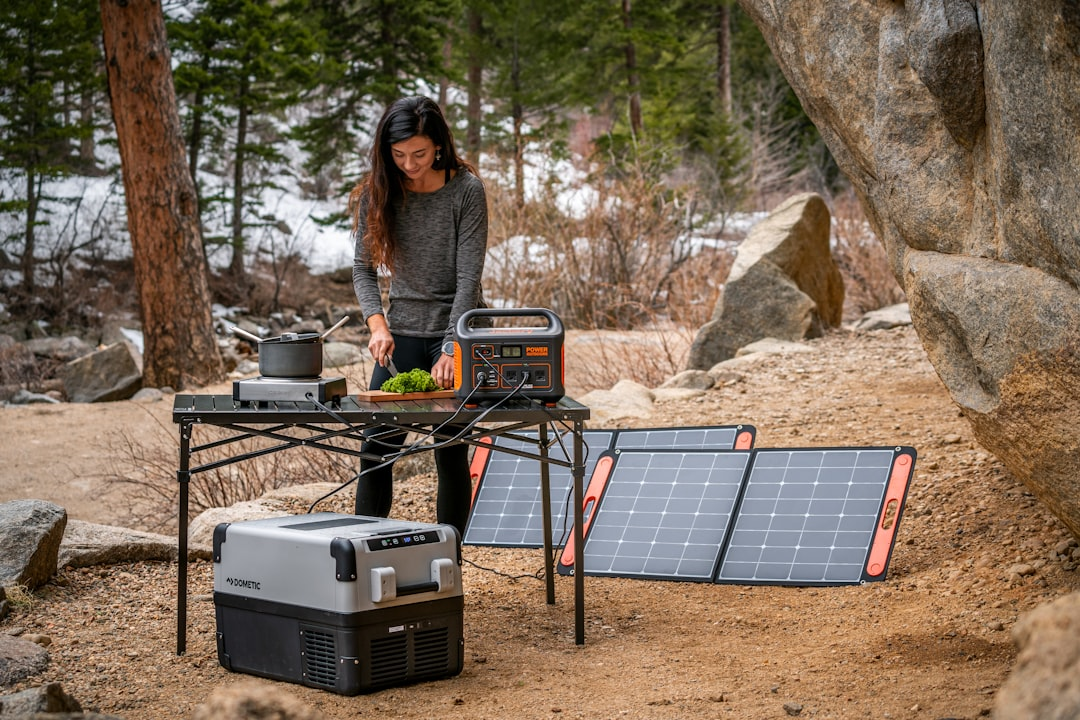
The Jackery Explorer 1000 v2 combines a 1,070Wh lithium iron phosphate battery with a 1,500W AC output in a portable package. For RV travelers, that makes it useful as quiet supplemental power—not a substitute for a properly sized RV electrical system.
Key specifications
| Battery capacity | 1,070Wh |
|---|---|
| Battery chemistry | LiFePO4 |
| AC output | 1,500W rated; 3,000W surge |
| Cycle-life claim | 4,000 cycles to at least 70% capacity |
| Solar input | Up to 200W with one input or 400W with dual input |
| Weight | About 10.8 kg / 23.8 lb |
| Dimensions | 32.7 × 22.4 × 24.7 cm |
What it can realistically do
A power station is easiest to size with two numbers: running watts and watt-hours. Running watts determine whether an appliance can operate; watt-hours indicate roughly how long the battery can support it. A 60W device running for five hours needs about 300Wh before accounting for conversion loss. A 1,200W cooking appliance can be within the output rating yet consume energy quickly.
The 1,500W rated inverter is suitable for many chargers, televisions, CPAP machines, fans, compact cooking devices and power tools, provided the combined load stays within the unit’s limit. Air conditioners, electric water heaters, space heaters and simultaneous kitchen loads require careful measurement and may be poor matches for this capacity class.
Charging choices
Jackery supports AC, vehicle and solar input. The company lists fast AC charging at roughly an hour under supported conditions, while solar time varies with panel wattage, angle, temperature, clouds and the configured input. The official FAQ lists a 16–60V solar input range and up to 400W through dual input, so panel voltage and connector compatibility matter as much as the headline wattage.
RV-specific advantages
- Quiet supplemental power: useful during generator restrictions or short stops.
- Portable: can move between the RV, tow vehicle and campsite.
- LiFePO4 chemistry: the manufacturer’s cycle-life claim suits frequent use better than many older lithium-ion designs.
- Pure sine-wave AC: appropriate for a broad range of electronics when used within specifications.
Important limitations
This is not a plug-and-forget replacement for shore power. Never connect a portable power station to an RV in a way that can backfeed campground wiring, a generator circuit or household power. If you plan to feed the RV’s shore-power inlet, use the correct adapter, switch off high-draw loads and understand that the converter may try to charge the house battery from the power station.
Also check the specific Amazon package. Solar panels are often separate or bundled differently, and similar Jackery model names can lead to the wrong generation.
Our buying take
The Explorer 1000 v2 lands in a useful middle ground: more capable than a small electronics bank, but still light enough for many adults to move. Buy it around a measured energy plan. List each essential device, its watts and expected hours, then leave a reserve for inverter losses and cold or hot conditions. That exercise will tell you whether 1,070Wh is comfortable—or whether you need a larger system.