Affiliate disclosure: RVGearScout may earn a commission from qualifying purchases made through links on this page, at no extra cost to you.
The Klein Tools NCVT-3P is a dual-range non-contact AC voltage tester with an independent flashlight. It can help an RV owner screen cords, receptacles, and accessible conductors for the presence of AC voltage, but it cannot measure voltage or prove that a circuit is safe to touch.
Testing note: RVGearScout has not performed hands-on testing of this product. This review is based on current manufacturer information and RV-specific buying considerations.
Quick verdict
The NCVT-3P is a useful first-check tool for people who understand its limitations. Its selectable ranges cover low-voltage AC detection and standard line-voltage work, while the flashlight helps in dark compartments. Any result that affects repair safety should be confirmed with an appropriately rated contact tester by a qualified person.
Check current Klein NCVT-3P pricing on Amazon
How it fits an RV setup
Klein lists two detection ranges: 12–1000V AC and 70–1000V AC. The more sensitive range can respond to lower-voltage AC and induced fields; the standard range may reduce nuisance indications around crowded wiring. Select the range deliberately and test the instrument on a known live source before and after each use.
In an RV, a non-contact tester may help screen a shore cord, pedestal lead, receptacle face, transfer-switch area, or appliance cord without exposing conductors. It does not evaluate polarity, grounding, neutral condition, voltage level, frequency, DC battery circuits, or the ability of a connection to carry load.
What stands out
- Dual sensitivity: Two AC ranges give the user a choice between broader detection and a less sensitive standard-voltage mode.
- Integrated flashlight: The light operates independently for utility-bay and cabinet inspection.
- Audible and visual indication: Multiple cues are useful in bright or noisy environments.
- Compact format: A pocket clip makes the tester easy to keep with an RV diagnostic kit.
Limitations and checks
Non-contact testers can miss voltage because of shielding, distance, orientation, depleted batteries, or a broken tool. They can also indicate induced or nearby voltage. Never treat a silent result as proof of de-energization, and never use the tester beyond its marked category, voltage, moisture, and temperature ratings.
Turn off shore power, inverter output, generator power, and relevant breakers before electrical work, then verify with the correct procedure and meter. RV systems can contain multiple sources, including 120-volt AC and 12/24/48-volt DC. If you cannot positively identify and isolate them, use a qualified RV electrician.
Who should buy it?
It fits owners who want a quick AC-presence screening tool and will pair it with proper lockout and contact testing. It is not the right sole instrument for troubleshooting low voltage, measuring pedestal quality, or declaring wiring dead.
Bottom line
The NCVT-3P adds a convenient layer of awareness, not certainty. Used on a known-live test sequence and backed by the right meter, it can earn a place in an RV toolkit.
Related RVGearScout guides
- Klein MM325 multimeter guide
- Klein RT250 outlet-tester review
- Klein ET450 circuit-tracer review
- Browse tools and diagnostics guides
Manufacturer research: product information was reviewed on Klein Tools’ official NCVT-3P page. Confirm the current manual, specifications, compatibility, and warranty before purchase or installation.
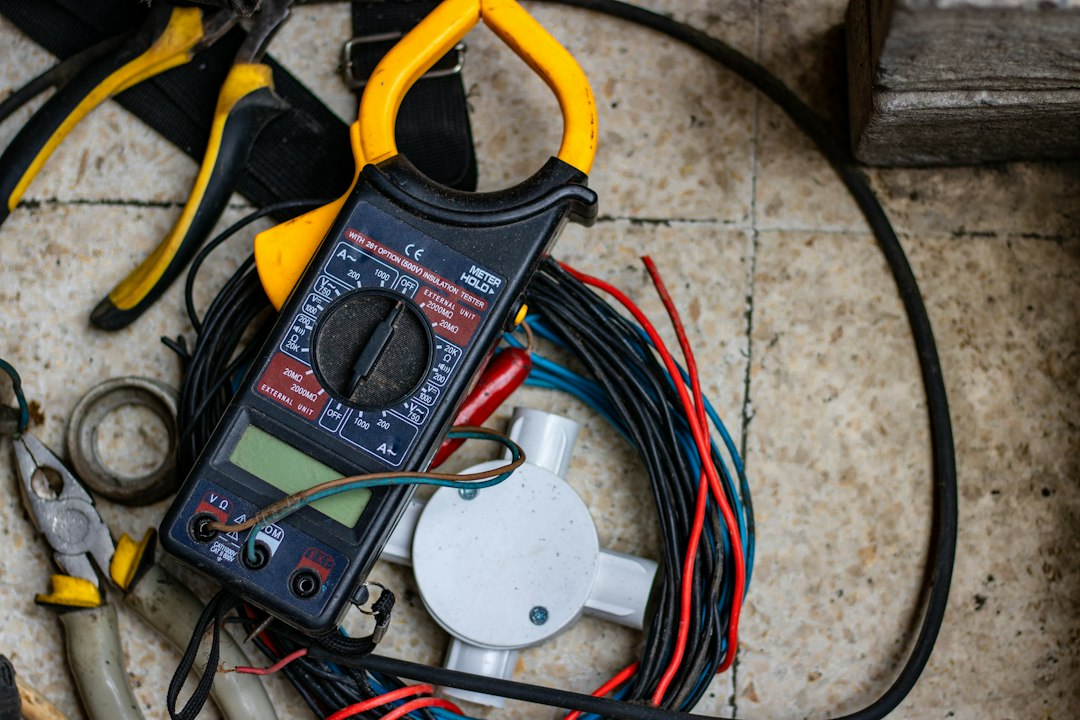
Photo by Hobi Industri on Unsplash. The image illustrates the use context and may not show the exact product reviewed.