Affiliate disclosure: As an Amazon Associate I earn from qualifying purchases. If you buy through an eligible link below, RVGearScout may receive a commission at no extra cost to you.
Renogy’s 200W N-Type rigid solar panel is aimed at RV, van and off-grid systems that need meaningful roof-mounted generation without using several small panels. The panel is only one part of the system: controller, wiring, protection, batteries, mounting and roof space determine whether it is a good fit.
What the product is
| Rated maximum power | 200 watts under standard test conditions |
|---|---|
| Cell type | N-Type monocrystalline |
| Cell layout | 16-busbar design |
| Efficiency claim | Up to 25%, depending on the exact version |
| Format | Rigid framed panel |
| Intended applications | RV, van, cabin and off-grid systems |
Start with an energy budget
A 200-watt rating is laboratory output, not a promise of 200 watts all day. Sun angle, shade, heat, clouds, wiring loss, controller efficiency and battery state all affect production. Estimate how many watt-hours your loads use each day, then compare that demand with conservative solar production for the places and seasons you travel.
Solar works best as part of a system. A refrigerator, fans, lights, water pump and electronics all draw from the battery bank. The panel replenishes that bank when conditions cooperate. If daily use exceeds daily charging, the battery state will continue to fall even though the panel is working normally.
Compatibility checklist
- Roof space: make a cardboard footprint and account for vents, antennas, air conditioners and required service access.
- Controller: verify the panel’s current and open-circuit voltage against the controller’s input limits.
- Series or parallel wiring: the configuration changes array voltage and current; stay within every component rating.
- Battery profile: set the charge controller for the battery chemistry and manufacturer requirements.
- Wire and protection: size conductors, connectors, fuses and disconnects for the complete design.
- Roof structure: use mounting and sealing methods approved for the RV roof construction.
Rigid versus portable solar
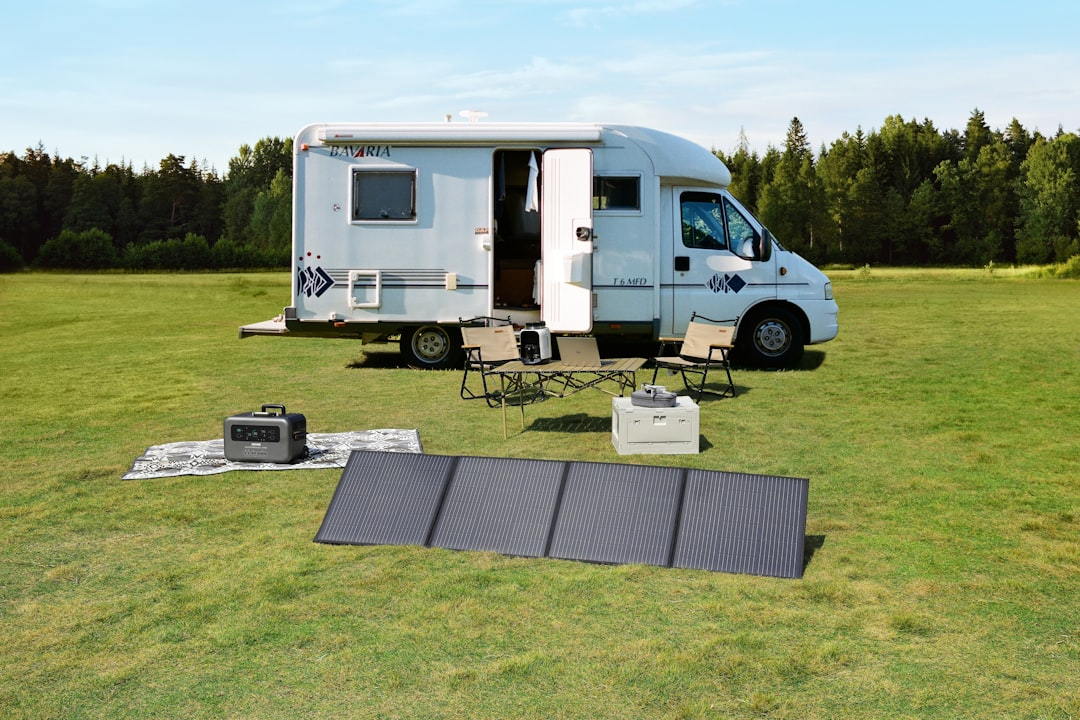
A fixed panel can charge while the RV is parked without a separate setup routine and is harder to forget at the campsite. The tradeoff is shade: if the RV is parked under trees, the panel stays under trees. A portable panel can be moved toward the sun but must be deployed, secured and stored.
Many travelers combine both approaches. A roof panel provides baseline charging while a portable panel adds production during longer stays. Confirm that the controller or separate input can accept the combined array before expanding.
Installation and safety
Roof penetrations can create expensive leaks, and solar circuits remain energized in sunlight. If you are not comfortable identifying the roof structure, calculating electrical limits and installing overcurrent protection, use a qualified RV solar installer. Never assume a kit label makes every part compatible with an existing system.
Our buying take
The Renogy 200W N-Type panel makes sense for buyers who have already done the measurements and want a space-efficient rigid module. It is not a complete power solution by itself. The right decision is the panel that fits the roof and the controller while supporting a realistic daily energy target.